
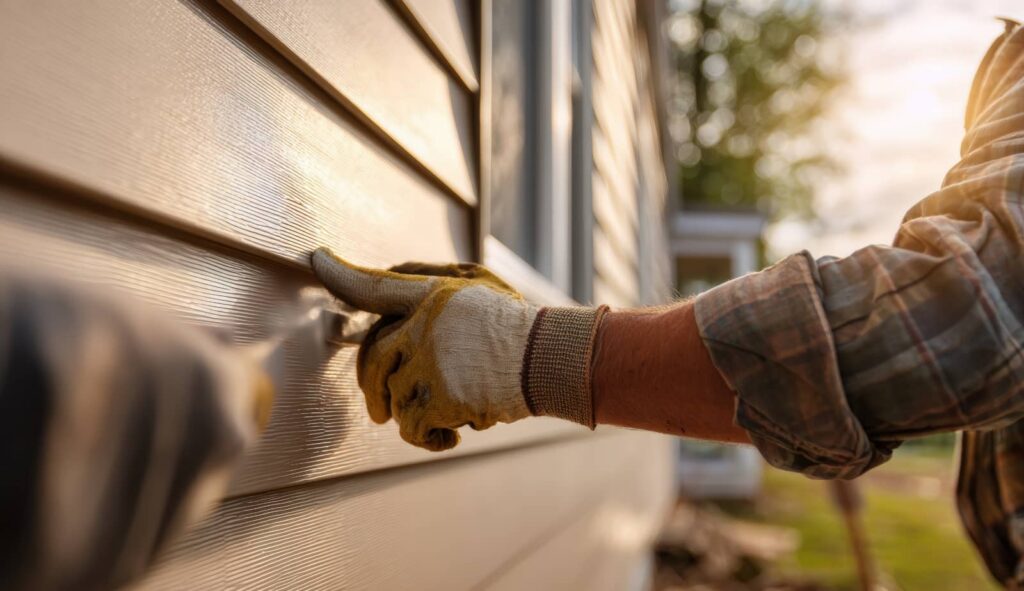
You may not realize that siding damage often starts behind the visible surface, where moisture can spread before you see a problem. When considering siding repair vs replacement, the key is knowing when a small fix will hold and when hidden rot, warping, or failed seams mean the entire system is compromised. Making the right choice can save you money now, while choosing the wrong solution can lead to more extensive and costly damage later.
Key Takeaways
- Repair is best for small, localized siding damage like cracks, loose panels, or minor rot.
- Replace siding when damage is widespread, recurring, warped, or linked to persistent moisture problems.
- Check for soft spots, buckling, and failed seams, which often signal deeper structural issues.
- Repair usually costs less upfront, while replacement can prevent repeated fixes and hidden damage expenses.
- Matching older siding can be difficult, so consider material age, availability, and long-term durability.
How To Tell If Siding Repair Is Enough
You can usually tell siding repair is enough when the damage is limited to a small area and hasn’t affected the wall beneath it. You should look for a few cracked panels, a loose section, or a single spot with minor rot.
If the siding still sheds water well and the color, shape, and fit match the rest of your home, repair often makes sense. In siding repair vs replacement decisions, you want the fix that solves the problem without adding unnecessary cost.
Check for soft spots, spreading stains, or gaps around trim, because those can signal deeper issues. If the damage stays isolated and your siding still protects the structure, a targeted repair can keep your home looking consistent and help you stay confident in the choice you make.
When Siding Needs Full Replacement
Full replacement makes sense when siding damage is widespread, recurring, or tied to structural problems beneath the surface.
If you’re seeing warped panels across multiple walls, deep rot, soft spots, or moisture that keeps coming back after patching, repair won’t give you lasting protection.
You also need full replacement when the siding has failed at the seams, buckled from movement, or no longer matches current weatherproofing needs.
In these cases, replacing the whole system helps you reset your home’s defense and avoid piecemeal fixes that keep breaking down.
You deserve an exterior that works as one unit, not a patchwork of temporary solutions.
A full replacement can restore confidence, curb appeal, and peace of mind for your household.
How Repair And Replacement Costs Compare
When you compare siding repair and replacement costs, you’ll usually see repairs tied to labor, materials, and how much damaged area you need to fix.
Replacement costs rise with full removal, new siding materials, disposal, and any hidden damage you uncover.
You can make a better choice by weighing the short-term repair price against the long-term value of a full replacement.
Repair Cost Factors
Repair costs usually make sense only for small, localized damage, while replacement becomes more cost-effective when problems spread across multiple sections or the siding system starts failing.
You’ll usually pay less when the fix involves a few cracked boards, a loose panel, or a small patch of rot. Labor drives much of the bill, so simple access and matching materials help keep costs down.
If your siding needs paint touch-ups, caulk, or fastener resets, repair can stay manageable. You should also factor in inspection time and the chance of hidden damage behind the surface.
When you catch issues early, you protect your home and stay part of the group of owners who keep maintenance under control without overspending.
Replacement Cost Factors
Replacement often costs more upfront, but it can save you money when damage runs deep, spreads across large sections, or affects the siding’s underlayment and trim.
You’ll usually pay for removal, disposal, new materials, labor, flashing, and any needed structural repairs. Material choice matters: vinyl stays budget-friendly, while fiber cement, wood, or composite can raise your total.
Complex layouts, multiple stories, and hard-to-reach areas also add labor costs. If your team finds water intrusion or rot, replacement may prevent repeat repairs and future mold issues.
You should compare long-term value, not just the first invoice. When matching old siding becomes difficult, a full replacement can also improve curb appeal and help your home feel consistent, protected, and ready for the next season.
How Cracks, Rot, And Warping Change The Choice
Cracks, rot, and warping often determine whether siding can be fixed or needs full replacement, because each one signals a different level of damage.
If you see small cracks, you can usually seal, patch, or replace individual boards without overhauling the whole exterior.
Rot is more serious, since it points to moisture intrusion and hidden decay; you’ll need to remove every affected section and check the backing underneath.
Warping changes the fit and lets water slip behind the panels, so it often means the material has lost its shape and strength.
You’re safest when you assess how far the damage spreads. If the issue stays isolated, repair may work. If it’s widespread, replacement gives you a tighter, longer-lasting result.
When Matching Old Siding Becomes A Problem
When your siding is older, finding an exact match can be harder than the repair itself. You may spot faded color, changed texture, or a profile that manufacturers no longer sell.
When that happens, a small patch can stand out and make your home look pieced together instead of cared for. You don’t need perfection, but you do need a result that feels cohesive and confident.
- Check for leftover stock from the original installer.
- Bring a sample to compare color and grain.
- Ask about custom paint or trim solutions.
- Consider replacement when the mismatch draws attention.
A close match helps your exterior feel unified, so you belong in your neighborhood with pride.
How Long Different Siding Materials Last
Different siding materials age at different rates, so the expected service life of your exterior should guide whether you repair or replace.
Vinyl often lasts 20 to 40 years, depending on thickness and sun exposure. Fiber cement commonly serves 30 to 50 years when you keep caulk joints sealed and paint intact.
Wood can perform for 20 to 30 years, but moisture and insects shorten that window fast. Engineered wood usually lands near 20 to 30 years, while brick and stone veneer can exceed 50 years with solid installation.
Aluminum may reach 40 years, though dents and oxidation show up sooner.
You know your home best, so track age, weathering, and maintenance history. That helps you stay confident and in control.
How To Decide Between Repair And Replacement
Age tells part of the story, but damage severity and repair cost tell the rest. You should lean toward repair when damage stays local, the siding still matches, and moisture hasn’t spread.
Choose replacement when you see widespread cracking, warping, rot, or repeated failures after past fixes. Compare the estimate to the siding’s remaining life; if repairs cost a large share of replacement, replacement often wins. You’re not alone in weighing budget against long-term value.
- Patch small, isolated holes or dents.
- Replace sections when panels no longer seal.
- Upgrade if energy loss keeps rising.
- Act fast when water reaches sheathing.
A trusted contractor can inspect hidden damage and help you choose confidently.
Frequently Asked Questions
How Often Should Siding Be Inspected?
You should inspect your siding at least once a year, and after major storms. You’ll catch cracks, warping, or moisture early, protect your home, and avoid bigger repairs that can cost you more later.
Does Weather Affect Siding Damage Rates?
Aye, weather absolutely affects siding damage rates. You’ll see more cracks, warping, and rot after storms, freeze-thaw cycles, and harsh sun. Inspect yours regularly, so you can catch problems early and protect your home’s community feel.
Can Siding Repairs Improve Home Energy Efficiency?
Yes, siding repairs can improve your home’s energy efficiency by sealing gaps, fixing cracks, and reducing drafts. You’ll keep conditioned air inside, lower utility costs, and feel more comfortable without replacing every panel.
Are Permits Needed for Siding Replacement?
Yes, you’ll often need permits for siding replacement, especially if you change materials, alter sheathing, or affect structural elements. Check your local building department first; you’ll fit in better and avoid costly delays.
Which Siding Material Resists Pests Best?
Fiber cement usually resists pests best, since insects can’t easily eat or nest in it. You’ll also get strong protection from engineered wood with proper sealing, though wood siding needs more maintenance and stays vulnerable.
Conclusion
When you weigh siding repair vs. replacement, focus on the damage, the material’s age, and your long-term costs. If you’re dealing with a few cracks or a small rot spot, repair may be enough. But if warping, moisture, or repeated failure keeps showing up, replacement usually saves you more over time. Don’t let a quick fix become a costly relic of yesterday; choose the option that protects your home now and later.