
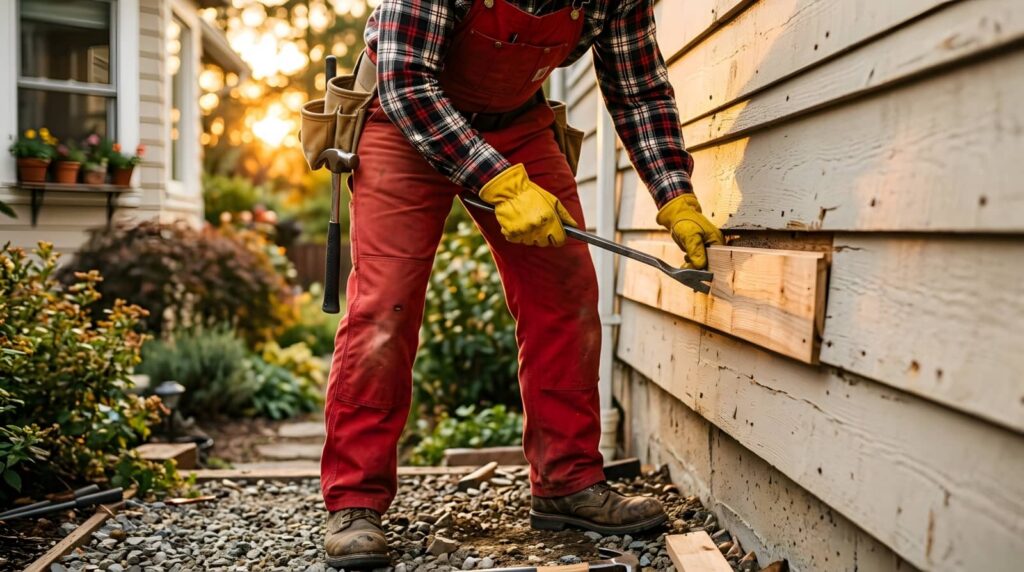
You might not realize that small siding repair problems can let water and air slip into your walls long before you see major damage. If you spot cracks, warping, loose panels, fading, stains, soft spots, or peeling paint, your siding may already be failing. Drafty rooms and rising energy bills can point to hidden gaps too. Catching these signs early can save you from a much bigger repair later.
Key Takeaways
- Fading, stains, mildew, or peeling paint can indicate siding is no longer protecting your home.
- Cracks, warping, loose panels, or gaps often mean the siding needs repair.
- Soft spots, swelling, mold, or musty odors suggest moisture damage behind the siding.
- Rising energy bills and drafty rooms can signal damaged siding and poor insulation.
- Water intrusion, missing pieces, or storm damage require prompt professional inspection.
Common Signs Your Siding Needs Repair
A quick check of your siding can save you from bigger repairs later. You can spot signs siding repair is needed by looking for fading color, stains, mildew, and areas that feel soft or damp after rain.
If your siding no longer sheds water well, your home may be inviting moisture inside. You might also notice higher energy bills, drafts near walls, or paint that peels again and again.
These clues often mean your siding isn’t protecting your home like it should. When you catch them early, you help your house stay strong and comfortable, and you keep your neighbors’ favorite gathering place looking cared for.
Trust what you see, act quickly, and you’ll protect your home before small issues grow into bigger trouble.
Cracks, Warping, and Loose Siding
Cracks, warping, and loose siding are clear warning signs that your home needs attention now, not later. You might notice split boards, panels that bow outward, or pieces that shift when you press them.
These issues can make your home look tired, but they also mean the siding isn’t doing its job well. When panels move or separate, your exterior loses strength and protection.
You don’t have to ignore small changes and hope they pass. Instead, check problem areas after storms, heat, or age-related wear.
If you see gaps, buckling, or sections pulling away, call a siding pro soon. Quick action helps you stay ahead of bigger repairs and keeps your home looking like part of a well-kept neighborhood.
Siding Repair Signs of Moisture Damage
When moisture gets behind your siding, it can cause damage that gets worse fast. You might notice peeling paint, soft spots, or siding that feels damp after dry weather.
Dark stains, bubbling surfaces, and a musty smell near walls often point to trapped water. Check for mold around seams, windows, and trim, since these spots usually show trouble first.
Inside your home, look for discolored drywall or warped baseboards near exterior walls. If you see swollen boards or nails that pop out, your siding may be holding water.
Don’t ignore these signs. Catching moisture damage early helps you protect your home, stay comfortable, and keep your neighborhood pride strong. When you act quickly, you give your siding a better chance to last.
Siding Problems That Raise Energy Bills
Siding damage doesn’t just let moisture in; it can also let heated or cooled air escape. When panels warp, crack, or pull away, your home can lose comfort fast, and your HVAC system has to work harder to keep up.
You might notice rooms that feel drafty, uneven temperatures from one side of the house to the other, or higher utility bills that seem to creep up each month. Gaps around seams and edges can also weaken your home’s protective layer, making it less efficient.
If you’re seeing these signs, you’re not alone—many homeowners deal with them before realizing siding needs attention. A quick inspection can help you spot problem areas early and protect both your comfort and your budget.
When Siding Damage Needs Immediate Repair
Even a small siding problem can become urgent if water is getting behind the panels, pieces are loose or missing, or you can see soft spots, swelling, or mold inside the wall.
In those cases, don’t wait for a weekend fix. You need repairs now because moisture can spread fast, weaken framing, and invite pests.
If you spot cracks after a storm, buckling, rot, or gaps where the siding pulls away, treat it as a priority.
You can also check inside for peeling paint, damp drywall, or a musty smell, since those signs mean the damage has already moved past the surface.
Calling a trusted pro early helps protect your home and keeps you in control, not scrambling later.
Frequently Asked Questions
How Often Should Siding Be Inspected by a Professional?
You should have your siding professionally inspected once a year, and after storms. You’ll catch small issues early, protect your home, and keep your exterior looking great without costly surprises.
What Siding Materials Last the Longest?
Fiber cement and brick usually last the longest, and you’ll also get great durability from stone veneer and well-maintained metal siding. You’ll want to match your choice to your climate, budget, and home’s style.
Can Siding Be Repaired in Cold Weather?
Yes, you can repair siding in cold weather, but you’ll need the right materials and careful installation. You should avoid brittle conditions, seal gaps quickly, and let any adhesive cure properly for lasting results.
How Much Does Siding Repair Usually Cost?
You’ll usually spend about $300 to $1,500 for siding repair, though small fixes can cost less and larger patches more. Your price depends on damage, materials, and labor, so getting a few quotes helps.
Does Siding Repair Affect Home Insurance Coverage?
Yes, it can. You’ll usually keep coverage if you fix siding damage promptly and document it. If you ignore problems, your insurer may deny related claims or raise rates after inspections.
Final Thoughts
If you spot cracks, warping, loose panels, stains, or musty odors, don’t wait to act. These siding repair warning signs can quickly turn into bigger moisture and insulation problems. In fact, the U.S. Department of Energy says heat loss through walls and other envelope leaks can account for a home’s heating and cooling energy use. A quick inspection now can help you protect your home and avoid costly repairs later.