
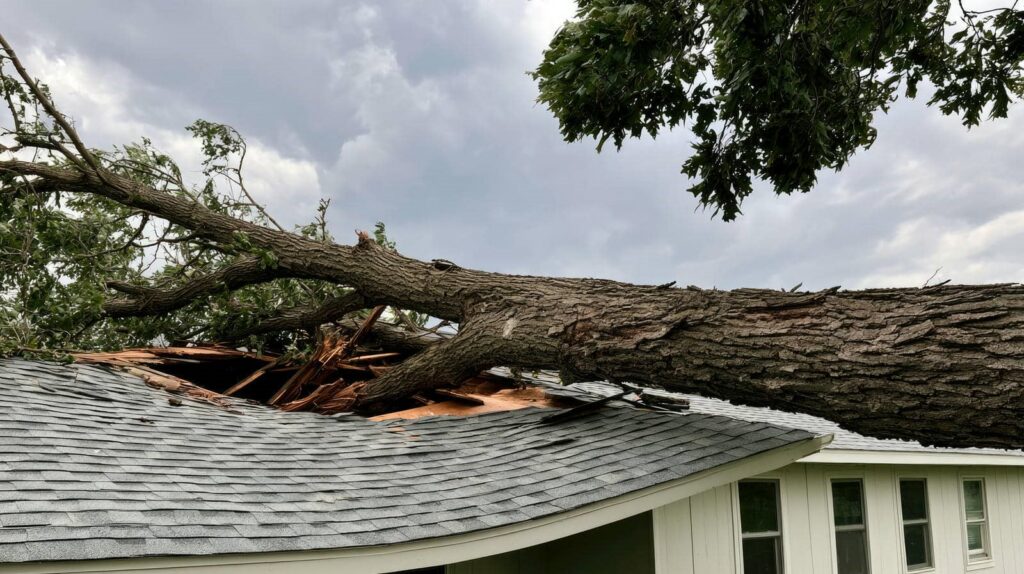
After a strong gust, you notice a lifted shingle near the ridge and a faint stain on the ceiling below. You can’t ignore that sign for long, because wind can loosen flashing, break seals, and let water in fast. If you wait, small roof damage can turn into hidden rot, warranty issues, and higher repair costs. Knowing what to check next could save you from a much larger problem.
Key Takeaways
- Wind damage can expose shingles, underlayment, and decking to moisture, causing leaks and costly structural damage.
- Missing shingles, lifted tabs, bent flashing, and granules in gutters are common signs that repair is needed quickly.
- Delaying repairs can turn minor roof issues into widespread rot, larger replacements, and higher insurance complications.
- A prompt professional inspection can identify hidden damage, document it properly, and restore the roof’s weather barrier.
- Fast repair protects your home’s value, safety, and long-term roof lifespan while reducing future maintenance costs.
Why Wind Damage Roof Repair Can’t Wait
When wind damages your roof, you should act fast because even minor lifting or missing shingles can expose the underlayment and decking to moisture, accelerating deterioration and increasing the risk of leaks, rot, and structural instability.
You protect your home by scheduling wind damage roof repair promptly, before small failures spread into costly system-wide damage.
Wind can loosen fasteners, break seal bonds, and stress flashings, leaving vulnerable edges open to water intrusion and uplift.
If you wait, repair crews may need to replace larger sections, not just isolated components, which raises labor and material costs.
Acting now keeps your roof assembly performing as designed and helps you stay part of a community that values safe, resilient homes.
Timely action also preserves your warranty and reduces insurance complications.
Signs Your Roof Has Wind Damage
You can spot wind damage by checking for missing or lifted shingles, especially along edges, ridges, and roof penetrations.
You should also look for granule loss in gutters or downspouts and scattered debris around your property, since both indicate surface wear from high winds.
If you notice these signs, you need a prompt inspection to limit further damage and prevent water intrusion.
Missing Or Lifted Shingles
Missing or lifted shingles often provide the clearest early warning of wind damage on a roof. When wind breaks the seal or tears a shingle away, your underlayment stays exposed and your roof loses a key moisture barrier.
You should inspect edges, ridges, and slopes after strong gusts, because damage usually starts where uplift pressure is highest. If you spot a few shingles out of line, don’t wait; the problem can spread fast.
- Check for tabs that curl, crease, or flap
- Compare shingle alignment across each roof plane
- Schedule repair before water enters the deck
You’re not overreacting by acting early—you’re protecting your home, your budget, and your neighbors who value reliable roofs too.
Granule Loss And Debris
Granule loss and scattered debris often reveal wind damage before a leak starts. You’ll usually spot dark, bald patches in gutters, downspouts, and at roof edges where wind has scrubbed off asphalt granules. That loss matters because granules protect the shingle mat from UV exposure and early cracking.
After a storm, check for shredded leaf litter, broken shingle tabs, flashing scraps, and bits of ridge cap around your yard. These clues tell you the roof took impact or uplift, even if the surface still looks mostly intact.
If you’re seeing heavy debris near one slope, you should treat it as a system issue, not a cosmetic one. Quick inspection and repair help keep your roof in the group of homes that stay dry, solid, and ready for the next storm.
How Wind Damages Shingles and Flashing
Wind can lift shingle tabs, break their seal, and tear them loose, exposing the underlayment and deck to moisture.
It can also pry flashing away from joints, creating gaps where water can enter around chimneys, vents, and valleys.
You need to address this damage quickly, because small openings can lead to leaks and broader structural problems.
Shingle Uplift And Loss
When roof shingles lift, the adhesive seal can break, exposing the underlayment and fasteners to direct weather exposure. You’ll often notice curled tabs, missing pieces, or shingles that slide out of place after strong gusts.
Once wind gets under the edge, it can pry more shingles loose and strip protective granules, reducing surface durability. You’re protecting your home best when you act fast and inspect the roof after any major storm.
- Check for bare patches where shingles are gone
- Look for raised edges that no longer lie flat
- Watch for debris that matches shingle material
If you share a neighborhood hit by wind, you’re not alone. Quick repair helps you stay ahead of leaks, keeps damage contained, and supports the roof system you rely on.
Flashing Loosening And Gaps
One of the most vulnerable areas after a storm is the flashing, because strong gusts can lift its edges, break sealant bonds, and create gaps where water can enter.
You may not see the damage from the ground, but even a slight separation around chimneys, vents, valleys, or skylights can let moisture reach the roof deck and attic. If you ignore it, water can rot sheathing, stain ceilings, and weaken framing.
You should inspect for bent metal, missing fasteners, torn caulk, and lifted seams right away. Prompt repair restores the weather barrier and keeps your home secure.
When you act quickly, you protect your house and join other homeowners who know small fixes prevent costly structural repairs.
What Happens When Wind Damage Goes Unrepaired
Left unrepaired, wind damage can quickly turn a minor roof issue into a major structural problem. You may see missing shingles widen, underlayment weaken, and fasteners back out, letting water travel into decking and insulation.
That moisture can rot framing, stain ceilings, and raise repair costs fast. If the opening stays exposed, repeated gusts can lift surrounding materials and spread the damage across your roof system.
You’re protecting more than shingles; you’re protecting your home’s structure, comfort, and value.
- Water intrusion accelerates hidden decay
- Wind uplift can expand the failure zone
- Small delays often mean bigger, costlier repairs
How to Inspect Wind Damage Safely
Before you climb up, inspect wind damage from the ground with binoculars or a zoom camera and look for lifted shingles, bent flashing, loose gutters, and debris impact points.
Check roof planes at different angles so you can catch subtle edge lifting and displaced ridge caps. If you have attic access, scan for daylight, damp insulation, or dark stains that signal roof movement.
Wear shoes with firm traction, and never step onto a wet, steep, or visibly sagging roof. Keep your weight on structural members only, and use a stable ladder set on level ground.
Document each concern with photos and notes so your roofing team can work from clear evidence. Careful inspection helps you stay safe and stay aligned with homeowners who protect their homes early.
When to Call for Wind Damage Roof Repair
Call a roofing professional as soon as you spot lifted shingles, missing sections, bent flashing, active leaks, or ceiling stains after a windstorm, because delay can let moisture reach the deck, underlayment, and framing.
You should also act fast if you hear rattling shingles, see granules in gutters, or notice daylight at roof edges. These signs tell you the roof system’s seal has been compromised, and your home needs prompt attention from a trained team.
- Request an inspection after any gusts over 50 mph.
- Call sooner if leaks show up during rain.
- Document damage with photos for your records.
When you move quickly, you protect your home, reduce repair costs, and stay aligned with neighbors who handle storm damage before it spreads.
What Wind Damage Roof Repair Includes
A wind damage roof repair typically starts with a full inspection to identify every compromised component, from missing or curled shingles to damaged flashing, lifted ridge caps, loosened vents, and torn underlayment.
You’ll usually get targeted shingle replacement, resealing around penetrations, and reinforcement of exposed edges to stop water intrusion fast.
If wind has cracked seal strips or displaced metal trim, your roofer will restore those details so the roof system works as one unit again.
You may also need decking repairs where moisture has already entered.
A thorough repair protects your home, keeps your family’s space secure, and helps you stay part of a neighborhood that looks after its own.
When the damage is caught early, you avoid bigger structural costs and extend the life of your roof.
Frequently Asked Questions
How Much Does Wind Damage Roof Repair Typically Cost?
You’ll typically pay $300 to $1,500 for wind damage roof repair, though severe damage can cost more. You should get an inspection fast, because you’ll reduce leak risks, protect your home, and avoid pricier structural repairs.
Will Insurance Cover Wind Damage Roof Repair?
Yes, your policy often covers wind damage roof repair if the storm caused sudden loss. You’ll need photos, a prompt claim, and an adjuster’s inspection. Check your deductible, exclusions, and maintenance records.
How Long Does Roof Wind Damage Repair Usually Take?
It usually takes you one day to a week; for example, a 2,000-square-foot shingle roof with minor uplift may finish in two days, while you’ll need longer if decking, flashing, or permits need attention.
Can I Temporarily Patch Wind Damage Before Repairs?
Yes, you can temporarily patch wind damage if you secure loose shingles and cover exposed areas with a waterproof tarp. You’ll buy time, but you still need a professional repair to prevent leaks, rot, and worsening structural damage.
Does Wind Damage Roof Repair Require Replacing the Whole Roof?
No, you usually don’t need a whole-roof replacement. You’ll inspect the damaged area, fix lifted shingles, seal flashing, and replace sections if needed. If wind’s broken the system, you’ll know—and your crew will tell you.
Conclusion
You might think a few lifted shingles can wait, but wind damage does not. That small gap becomes the roof’s open invitation to rain, rot, and rising repair costs. If you inspect safely, you can spot trouble early, call for wind damage roof repair, and stop hidden decay before it spreads. Quick action protects your warranty, your home’s structure, and your peace of mind. In roofing, delay is the expensive mistake.