
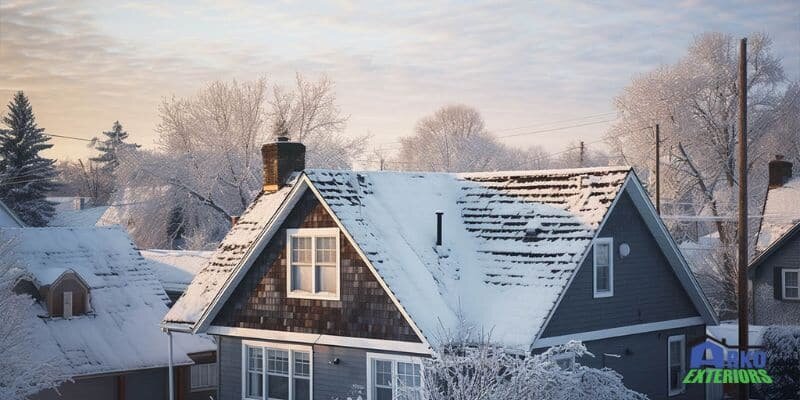
How Snow & Ice Impact Your Roof: Taking Care of Your Roof in Minnesota Winters
Minnesota winters are tough on roofs. Between heavy snow, freezing rain, and extreme temperature swings, your roof faces several months of harsh conditions that may take a serious toll. Continue reading to learn more about how snow and ice can impact your roof and how you can combat common winter problems to prevent expensive roof damage.
Top 3 Winter Problems for Roofs in the Twin Cities Area
1. Heavy Snow Accumulation
Snow might look soft and fluffy, but when enough of it piles up, it becomes extremely heavy. A single cubic foot of packed snow can weigh more than 20 pounds. When a large amount of snow falls in the Twin Cities – especially if it’s wet snow – that weight adds up quickly. Excessive snow loads will stress your roof structure, especially on flat or low-pitched roofs. Heavy enough snow build-up could even cause your roof to collapse.
Since most of us try to avoid spending too much time outside during a cold and snowy Minnesota winter, you may not notice how much snow has accumulated on your roof. If you see ceilings or rafters beginning to sag or crack during winter, this is a clear indicator that your roof is nearing structural failure and you should remove the snow immediately. By regularly removing heavy snow buildups, you can prevent structural stress on your roof and extend its lifespan.
2. Ice Dams
Ice dams are one of the biggest winter roofing problems in the Twin Cities metro. These dams are formed when heat from inside your home melts the snow on your roof, causing water to flow down to the colder eaves and gutters, where it then refreezes. After this happens a few times, ice dams will create a barrier that traps melted snow behind it. When ice dams form on your roof, water will be forced under shingles and into your attic and walls.
The most obvious sign of an ice dam on your roof is icicles forming along the roofline. If you suspect an ice dam problem, check for water stains, peeling paint, and damp insulation in your attic; these are warning signs of a serious issue. Your best defenses against ice dams are proper attic insulation and ventilation. Keeping the temperature of your roof consistent will prevent melting snow from refreezing as ice dams.
3. Freeze-Thaw Damage
The temperature fluctuations during winter days in Minnesota mean your roof will go through daily cycles of freezing and thawing. This can become a problem when melted snow seeps into small gaps and refreezes, causing it to expand. Over time, this freeze-thaw cycle can loosen roof shingles, flashing, and gutters, resulting in severe damage.
Cracked and lifted shingles are the most common forms of roof damage inflicted by the freeze-thaw cycle. However, the expansion during this cycle can also detach gutters and damage seals around roof vents and chimneys. It’s recommended to schedule a roof inspection in early spring to catch minor damage before it worsens and requires larger repairs.
Tips for Protecting Your Roof in Winter
These measures can prevent snow and ice damage to your Twin Cities roof this winter:
- Clean your gutters in late fall to allow melting snow to drain properly throughout winter.
- Add improved insulation and ventilation in your attic to prevent ice dam formation.
- After each heavy snowstorm, use a roof rake to safely clear snow from the edges of your roof.
- Regularly inspect your roof for snow and ice buildup, or any visible damage.
- Schedule a professional roof inspection in fall to correct issues before winter, and again in spring to address any damage that occurred during winter.
Prevent Winter Roof Damage with Twin Cities Professionals
Do you want help to prevent snow and ice from damaging your roof this winter? Connect with Arko Exteriors today if you’d like to schedule a roof inspection or repairs in the greater Twin Cities area!