
Gutter installation helps control runoff and protect your home from water damage. Even a slight gutter pitch error can push water back under your roofline. A properly installed system helps protect siding and fascia while reducing soil erosion near the foundation. Material choice, hanger spacing, and downspout placement all affect performance. If you’ve noticed overflow, sagging, or staining, it may be time to assess your gutters before the damage spreads.
Key Takeaways
- Proper gutter systems direct rainwater away from your roof, siding, and foundation, reducing costly water damage.
- Correct installation ensures steady water flow during heavy storms and prevents overflow, sagging, and leaks.
- Choosing the right material and style improves durability, capacity, and resistance to local weather conditions.
- Secure downspouts and proper slope help move water safely away from the home and protect walkways and landscaping.
- Regular inspection and cleaning keep gutters efficient, prevent clogs, and extend the system’s lifespan.
Why Gutter Installation Matters
Proper gutter installation matters because it directs rainwater away from your roof, siding, and foundation before moisture can cause damage.
When you choose gutter installation that fits your home’s pitch, fascia, and drainage load, you help the entire exterior perform as a unified system. You reduce uncontrolled runoff, protect trim and cladding, and preserve structural integrity where water would otherwise concentrate.
Correct slope, secure fastening, and sealed joints keep flow consistent during heavy storms, so you’re not left managing avoidable strain. You also gain confidence knowing your home belongs to a well-engineered defense against water intrusion.
With precise gutter installation, you support long-term durability, cleaner exterior surfaces, and reliable protection that works with your home, not against it.
Signs You Need New Gutters
You can identify failing gutters by checking for visible damage such as cracks, sagging sections, rust, or separated joints.
If your gutters overflow frequently during normal rainfall, they may no longer be moving water away from your home effectively.
These conditions usually mean it’s time to replace the system before water damage spreads.
Visible Gutter Damage
Cracks, splits, rust spots, sagging sections, and separated seams are clear signs your gutters may need replacement. You can inspect each run from the ground and look for deformation, corrosion, or joint failure.
These defects weaken the channel’s structural integrity and reduce its service life. If you belong to homeowners who value dependable protection, treat visible damage as a practical warning, not a cosmetic issue.
Minor surface wear can progress quickly once water, debris, and temperature changes stress the material. Check fasteners, corners, and end caps for distortion, because damaged components rarely self-correct.
When you spot multiple defects in one system, replacement usually offers a safer, more efficient solution than patchwork repair. New gutters restore proper alignment and help protect your home’s envelope.
Frequent Overflow Issues
If your gutters overflow during moderate rain, the system isn’t moving water fast enough, and that usually points to a design or condition problem that needs attention.
You may see water pouring over the front edge, pooling near downspouts, or splashing onto siding and walkways. That excess flow often means the channels are undersized, pitched incorrectly, clogged, or separated at seams.
You shouldn’t accept frequent overflow as normal, because it sends water toward your roofline, foundation, and landscaping.
When you belong to a home that’s protected well, your gutter system works quietly and consistently.
If cleaning doesn’t solve the issue, you likely need new gutters with proper capacity, secure hangers, and correctly placed downspouts to handle your roof’s runoff.
Choosing Gutter Materials and Styles
Choosing the right gutter material and style starts with matching performance to your climate, roof design, and maintenance needs.
Aluminum gives you a strong balance of cost, corrosion resistance, and easy forming, while steel adds higher impact strength for harsher conditions.
Copper lasts decades and develops a distinctive patina that fits premium homes.
Vinyl is lightweight and affordable, but it can become brittle in extreme heat or cold.
For style, K-style gutters handle higher flow and suit most modern exteriors; half-round gutters shed debris better and complement traditional architecture.
You’ll want a profile that fits your home’s look without sacrificing drainage capacity.
When you choose thoughtfully, you join homeowners who protect their property with systems that perform as well as they look.
What a Proper Gutter Install Includes
A proper gutter install starts with the correct slope, so water moves steadily toward the downspouts without pooling in the run.
You should set each downspout in a secure, load-bearing position that keeps discharge controlled and away from the foundation.
When you align slope and placement correctly, you protect the roofline, siding, and base of the structure.
Proper Slope Setup
Proper slope setup ensures water flows steadily toward the downspout instead of pooling in the gutter, which can lead to overflow, sagging, and premature wear. You need a consistent pitch of about 1/4 inch for every 10 feet, though your layout may vary with roof length and material.
When you set that angle correctly, you help your system move runoff efficiently and protect your home with the rest of your neighborhood.
- Measure each run before fastening.
- Mark the high and low points accurately.
- Check the pitch with a level or laser.
- Recheck after tightening hangers.
A precise slope reduces standing water, limits debris buildup, and extends service life. It also helps your gutters perform as a reliable, unified system.
Secure Downspout Placement
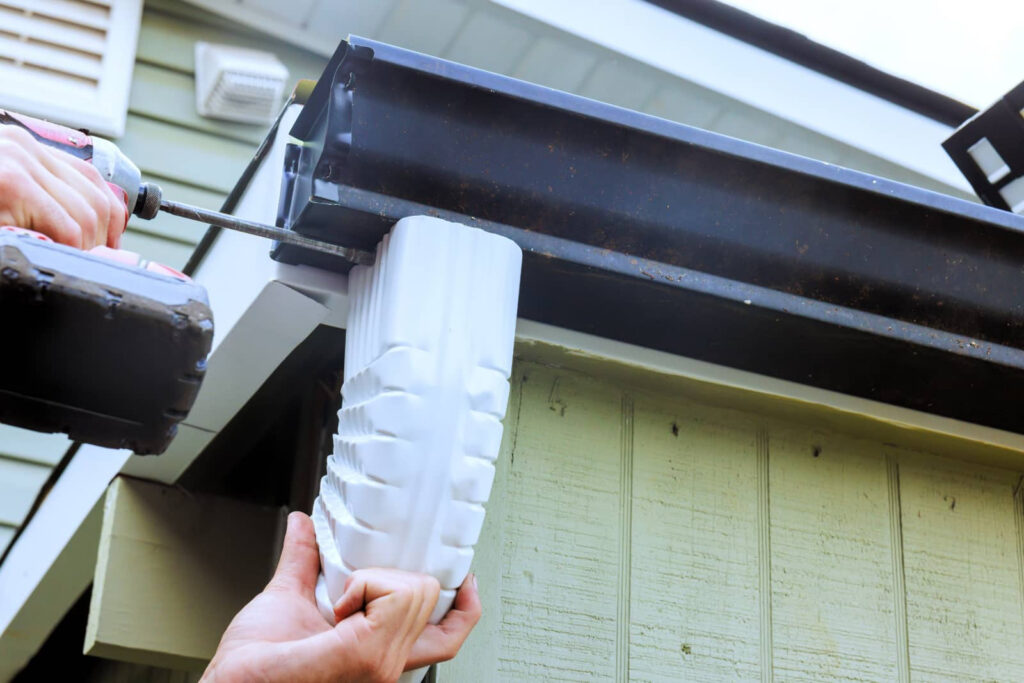
Once you’ve set the gutter slope, secure each downspout at a low point so water exits cleanly and doesn’t back up along the run. You should fasten the outlet with screws, then seal every joint to prevent leaks.
Keep the downspout plumb, and anchor it to the wall with straps at regular intervals so wind and runoff can’t shift it. Direct the discharge away from the foundation with elbows, extensions, or a splash block, and verify that the outlet clears walkways and planting beds.
When you place each downspout correctly, you protect your roof edge, siding, and footing from overflow. That detail also helps your home function as a tight, reliable system, giving you confidence that your neighborhood standard starts at your own curb.
How Gutters Protect Your Roof and Foundation
When gutters are installed correctly, they direct rainwater away from your roofline and foundation, reducing the risk of leaks, rot, soil erosion, and structural settlement. You protect shingles, fascia, and underlayment by preventing standing water from backing up under roof edges. You also limit hydrostatic pressure near the footing, so your foundation stays stable and cracks are less likely to form.
- Roof runoff stays controlled at every edge.
- Water no longer saturates soil beside your home.
- Eaves and trim avoid premature deterioration.
- Your home’s structure remains safer and more unified.
This system helps you maintain a dry, durable envelope that supports everyone who lives there. With proper flow paths, your property works as a coherent defense against water intrusion.
Year-Round Gutter Maintenance
Year-round gutter maintenance keeps your drainage system working as designed by preventing clogs, corrosion, sagging, and overflow before they can damage the roof edge, siding, or foundation.
You should inspect your gutters each season, clear debris after storms, and confirm downspouts discharge away from the structure. Check fasteners, joints, and seals for movement or leaks, then tighten or reseal them promptly.
In fall, remove leaves before they compact; in winter, watch for ice buildup that can strain hangers and joints.
In spring and summer, verify slope and flow so water moves quickly.
When you maintain the system consistently, you protect your home and join a group of owners who take practical, informed care of their property.
Review
Your gutter system is the shield that keeps water from attacking your home. When you install the right materials, set the proper slope, and secure every joint, you direct runoff safely away from your roof, siding, and foundation. That protection reduces rot, erosion, and expensive structural damage. Keep up with routine cleaning and inspections, and you’ll preserve performance through every season. Proper gutter installation isn’t optional—it’s a critical part of your home’s defense.