
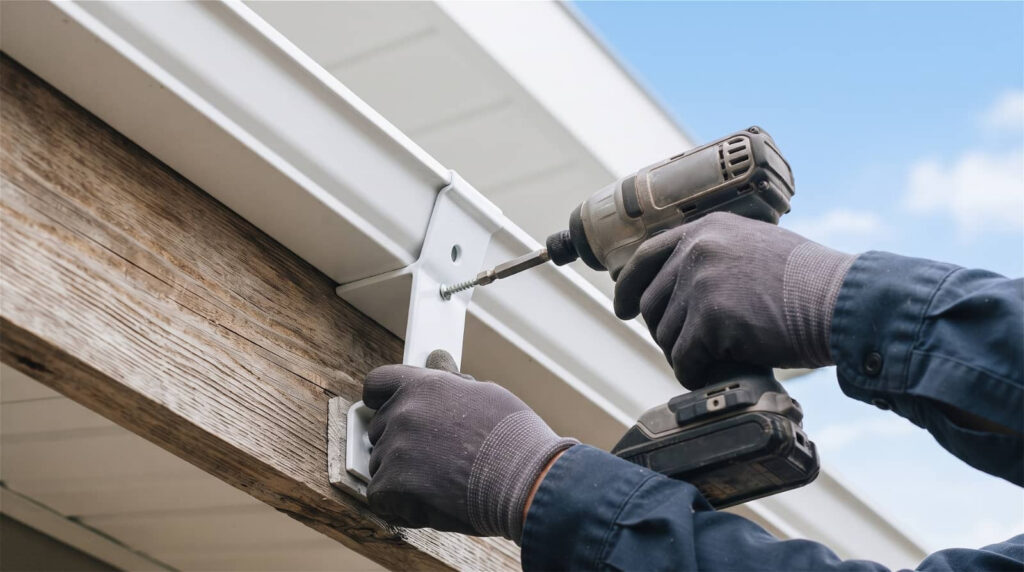
If you’re weighing gutter guard installation, you’re really deciding whether to trade upfront cost for less maintenance and fewer water issues later. The right system can cut clogs, reduce ladder work, and protect your roofline, but not every guard fits every home. Roof pitch, tree cover, and gutter design all matter, and the wrong choice can create new problems. Before you commit, it’s worth comparing the types and the real costs.
Key Takeaways
- Gutter guards are worth adding if you want fewer clogs and less frequent gutter cleaning.
- They help protect fascia, landscaping, and foundations by keeping water flowing during heavy rain.
- The best guard type depends on your debris, roof pitch, and local conditions.
- Installation costs vary, so get at least two quotes before deciding if the long-term savings justify the price.
- They reduce maintenance, but you still need occasional inspections and cleaning.
What Do Gutter Guards Actually Do?
Gutter guards keep larger debris like leaves, twigs, and shingle grit out of your gutters while still letting water flow through. You’re still responsible for directing runoff, but the guard helps reduce blockages at the trough and downspout entry.
Most systems use mesh, screen, or solid covers with edge openings to filter debris and pass rain. When you review gutter guard installation considerations, check roof pitch, local tree cover, gutter size, and fastener access, because each affects fit and performance.
You should also match the guard to your climate and maintenance routine. A well-selected guard won’t make your system maintenance-free, but it can keep water moving more reliably and help your home’s drainage team work with less interruption.
Are Gutter Guard Installations Worth It?
Once you know how guards filter debris and keep water moving, the next question is whether the payoff justifies the cost.
If you’re tired of climbing ladders, clearing sludge, and watching overflow stain your siding, guards can be worth it. They reduce routine cleaning, lower clog risk, and help protect fascia, landscaping, and foundations during heavy rain.
You’ll still need periodic checks, so they’re not a set-and-forget fix. For homes under trees, with steep roofs, or with frequent storms, the return is usually stronger. If your gutters stay mostly clear already, the benefit may be modest.
Think of guards as a maintenance upgrade: they won’t solve every drainage issue, but they can make your home-care routine safer, simpler, and more predictable for your household.
Which Gutter Guard Types Work Best?
The best gutter guard type depends on the debris your roof collects, your roof pitch, and how much maintenance you’re willing to do.
If you deal with pine needles or fine seed pods, micro-mesh usually performs best because it blocks small material while still letting water pass.
If your area gets large leaves, reverse-curve guards can shed debris well on steeper roofs.
Foam inserts are simple to install, but they can trap grit and need more checking.
Screen guards offer a solid middle ground for many homes and are easy to clean.
You’ll usually get the best results when you match the guard to your local trees, rainfall, and roof design, then keep up with occasional inspections.
How Much Does Gutter Guard Installation Cost?
Gutter guard installation usually costs a few dollars per linear foot, with the total driven by your roofline length and the system you choose.
Material quality, labor rates, and roof access can raise or lower the installed price.
You should also weigh the upfront cost against reduced cleaning and repair needs over time.
Average Installed Pricing
Average installed gutter guard pricing usually falls into a few clear cost bands, and your final bill depends on roof height, gutter length, guard type, and labor access.
For most homes, you’ll see totals ranging from a few hundred dollars for a short, single-story run to several thousand dollars for a larger, complex roofline. A basic estimate often comes out on a per-linear-foot basis, so measure your gutters first to gauge your range.
Expect pricing to rise when installers need extra setup or safety measures. You belong in the group that plans before buying: get at least two quotes, confirm what’s included, and ask whether cleanup and removal are part of the price.
That keeps your budget tight and your install straightforward.
Material And Labor Factors
Material and labor drive most of your gutter guard cost, with material choice often setting the base price and roof complexity setting the labor bill.
You’ll usually pay more for stainless steel micro-mesh, solid aluminum, or custom-fit systems than for basic plastic screens. Thicker, corrosion-resistant materials cost more up front but install with tighter tolerances.
Labor climbs when your roof has steep pitches, multiple stories, dormers, or hard-to-reach valleys, because crews need more time and safety gear.
Existing gutter condition matters too; if your gutters need rehangs, sealing, or fastener repairs, expect added charges.
To stay in the smart homeowner group, ask for a line-item quote that separates material, removal, and installation. That keeps comparisons clear and helps you see what drives the price.
Long-Term Value Comparison
Over time, the upfront cost of gutter guards can pay off if you live under heavy tree cover or spend money each year on frequent cleanings and repairs.
You’re not just buying hardware; you’re reducing service calls, ladder time, and water damage risk. A basic system may cost less initially, but better-fit guards often deliver stronger long-term savings because they clog less and last longer.
If you’ve had overflow, fascia rot, or basement moisture, guards can help you avoid repeat fixes. You should compare installation price against five to ten years of maintenance expenses.
For many homeowners, the break-even point arrives sooner than expected. When your neighborhood deals with leaves, pine needles, or storms, guards can make your home feel protected and smartly maintained.
What Should You Check Before Installing?
Before you install gutter guards, check your roof pitch, gutter condition, and the amount of debris your trees drop. Steeper roofs send water faster, so you’ll need a guard that handles higher flow without overflow.
Inspect gutters for rust, loose hangers, sagging sections, and seams that already leak; guards won’t fix weak hardware. Measure gutter size and compare it with your roof edge and fascia, so the system fits cleanly.
Look at the debris mix too: pine needles, seed pods, and shingle grit each demand different screen openings. You should also confirm that downspouts are clear and that you can still access the system for seasonal cleaning.
When you prepare this way, you set up a cleaner, tighter installation and join the group of homeowners who plan smart.
When Should You Skip Gutter Guards?
You should skip gutter guards when your roof drops heavy leaf loads that can overwhelm and clog the system quickly.
If your roof has multiple valleys, steep pitches, or complex intersections, guards can trap debris and make maintenance harder.
In these cases, you’re often better off relying on frequent cleaning and direct inspection.
Heavy Leaf Accumulation
If your roof sheds a lot of leaves each fall, gutter guards may not be the best fit, because heavy leaf loads can quickly cover the openings and still require frequent cleaning.
You’ll still need to clear the surface often, or water can spill over and leave you with the same maintenance cycle you hoped to avoid. Fine debris can also pack down on top of the guard and slow drainage.
In neighborhoods with dense tree cover, you may join many homeowners who find open gutters easier to inspect and flush.
If you want less hassle, compare the seasonal cleanup you already do with the added cost and effort of guard upkeep.
Sometimes simple gutters, cleaned on schedule, work better for your home and keep you in control.
Complex Roof Designs
Complex rooflines with multiple valleys, dormers, skylights, or steep pitches can make gutter guards harder to fit and less effective, since water and debris may not feed evenly into the system.
You may see splashover at valleys, overflow at inside corners, and clogging where runoff changes direction fast. In those cases, you’ll often get better results by improving gutter slope, adding larger downspouts, or cleaning more often instead of forcing a guard to do the wrong job.
If you’re part of a neighborhood with mixed roof styles, you’re not alone; many homeowners skip guards on complex sections and install them only where they help.
Have a contractor test flow during rain, then choose the setup that protects your home and fits your roof.
Wrap-Up
So, are gutter guards worth it? If your roof sheds heavy debris, the answer may be yes—but only if you choose the right type and install it correctly. You’ll cut down on clogs, reduce maintenance, and protect drainage systems. But don’t rush in: inspect your roof pitch, gutter condition, and local tree coverage first. The real payoff isn’t instant. It shows up later, when storms hit and your gutters still keep moving water.
Gutter guard installation can cut down on clogs, overflow, and routine cleaning. If you are weighing whether gutter guard installation makes sense for your home, our team can help as part of our gutter installation and replacement services. Contact Arko Exteriors with any questions. You can also learn more about rain gutters and how they work.