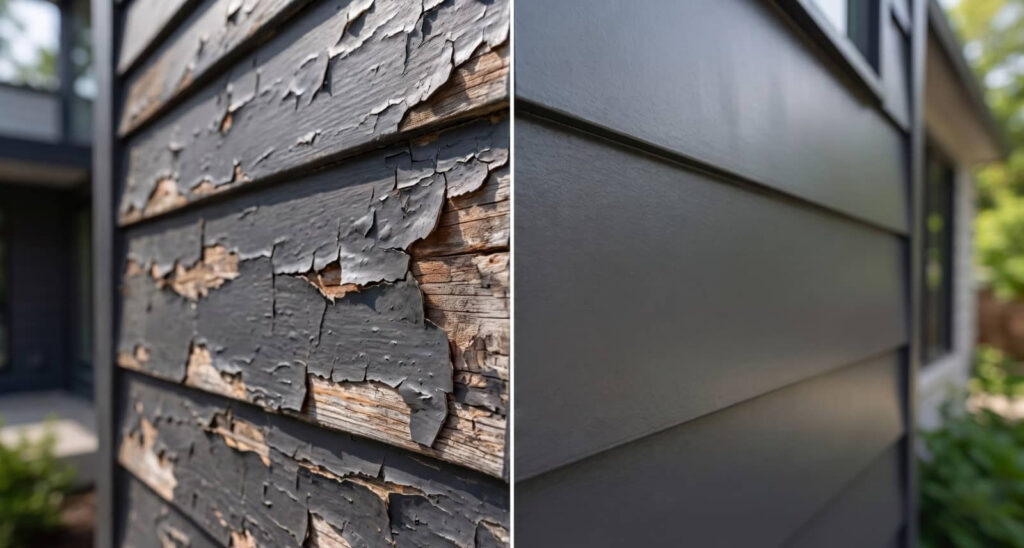
Siding replacement may be necessary if you notice cracks, warping, loose panels, or rot that leaves your home vulnerable to the elements. Fading, stains, peeling paint, and fungal growth can point to moisture intrusion and material wear. You might also feel drafts or see higher energy bills when insulation gaps form. The key is determining whether a simple repair will hold or if the damage has already spread further.
Key Takeaways
- Visible cracks, warping, rot, or loose panels often mean your siding is failing structurally.
- Widespread fading, peeling paint, or uneven finishes can signal material deterioration.
- Stains, soft spots, swelling, or fungal growth suggest moisture intrusion and hidden damage.
- Drafts, gaps, and rising energy bills may indicate siding is no longer insulating properly.
- If repairs keep recurring or damage is widespread, replacement is usually the better option.
Top Signs Your Siding Needs Replacement
If your siding is showing visible cracks, warping, rot, or widespread fading, it may be time to replace it.
You should also watch for higher energy bills, indoor drafts, and stains that suggest moisture is getting through. These are common signs you need siding replacement, and they often mean your exterior no longer protects your home as intended.
When siding loses its finish or looks uneven, it can signal material fatigue and reduced weather resistance. You deserve a home that performs well and looks consistent, so don’t ignore gradual deterioration.
A timely replacement helps restore insulation, curb appeal, and long-term durability. If you’re noticing several warning signs at once, it’s smart to schedule a professional inspection before damage spreads.
Cracks, Warping, and Loose Siding Panels
Cracks, warping, and loose siding panels are clear indicators that your siding’s protective barrier is failing. You may notice panels pulling away, edges curling, or seams opening after wind or temperature swings.
These defects don’t just affect appearance; they reduce stability and let the cladding move more than it should. Inspect your exterior for:
- Hairline or widened cracks
- Bulging or bowed sections
- Panels that rattle or shift
- Fasteners that no longer hold tightly
If you’re seeing several of these issues, your siding likely needs replacement sooner rather than later. Acting early helps you stay aligned with homeowners who protect their property with timely maintenance.
A qualified contractor can assess the extent of movement and recommend the most reliable next step for your home.
Fading, Rot, and Moisture Damage
Fading, rot, and moisture damage often signal that your siding is no longer sealing and protecting the structure as it should. When you notice color loss, soft spots, swelling, or discoloration, inspect the material closely.
You may see peeling paint, fungal growth, or dark staining around joints, trim, and lower edges. These signs usually mean water has entered the siding or backing material and started breaking it down.
If you press the surface and it gives way, or if sections feel crumbly, replacement is likely necessary. Don’t ignore these conditions; they can spread beyond the visible area.
Acting early helps you stay ahead of damage and keep your home’s exterior in solid shape with the rest of your neighborhood.
How Damaged Siding Raises Energy Bills
Damaged siding doesn’t just affect appearance; it can also drive up your energy costs. When your exterior loses integrity, you feel drafts, uneven temperatures, and higher HVAC demand. You’re not alone if your utility bills climb after siding wears down.
Key issues include:
- Gaps that let conditioned air escape.
- Cracks that admit outdoor heat or cold.
- Warping that reduces the wall’s thermal barrier.
- Moisture intrusion that lowers insulation performance.
These problems force your system to run longer and harder, which wastes energy and strains equipment.
Should You Repair or Replace Your Siding?
When siding starts to fail, the next question is whether a targeted repair will restore protection or if full replacement makes more sense.
You can usually repair isolated damage when the issue is small, the substrate is dry, and the rest of the cladding still performs well.
Choose replacement when you see widespread cracking, warping, rot, loose panels, repeated leaks, or fading that signals material breakdown.
If repairs keep recurring, you’re likely masking a deeper failure.
Replacement also makes sense when energy loss, moisture intrusion, or pest entry keeps affecting your home.
A full system upgrade gives you a tighter envelope and helps your home stand with others in the neighborhood.
The best choice comes from a professional inspection that traces damage, not just surface symptoms.
Review
When you see cracks, warping, or loose panels, your siding is warning you; when you ignore them, your home pays the price. Fading, rot, stains, and fungal growth may look cosmetic, but they often signal moisture intrusion and structural decline. If drafts are climbing and energy bills are too, your siding’s performance is failing. Don’t guess between repair and replacement—get a professional inspection and choose the fix that protects your home.