Siding replacement impacts home value by giving your home a fresh exterior that signals care before buyers even step inside. New siding can improve curb appeal, reduce visible wear, and ease future maintenance concerns. The actual ROI depends on material choice, installation quality, and local market expectations, so the return isn’t always straightforward. The key is knowing when the upgrade adds enough value to make the investment worthwhile.
Key Takeaways
- New siding boosts curb appeal, which can increase perceived home value and attract more buyers.
- Replacement is most worthwhile when siding shows warping, rot, cracks, or costly ongoing maintenance.
- Vinyl often offers the lowest upfront cost and solid resale recovery.
- Fiber cement usually costs more but can deliver strong durability and buyer appeal.
- ROI improves with durable materials, neutral colors, and professional installation that matches neighborhood expectations.
How Much Value Does New Siding Add?
How much value does new siding add? You can expect siding replacement ROI to improve when you choose materials that match neighborhood standards and your home’s condition.
New siding often raises home value by strengthening first impressions, reducing visible wear, and signaling careful ownership. In many markets, you won’t recoup every dollar, but you can recover a meaningful share while making your property more competitive.
The exact gain depends on material quality, installation, and local buyer expectations. If your exterior looks outdated, damaged, or inconsistent, fresh siding can narrow the gap between your home and nearby listings.
That matters because buyers often feel more confident entering a home that looks well kept. For you, the result is stronger market position and a more welcoming presence.
When Is Siding Replacement Worth It?
Siding replacement is worth it when the exterior is starting to affect both appearance and performance. If you’re seeing warping, cracking, rot, or frequent maintenance, the material may no longer be protecting your home efficiently.
You should also weigh the project if fading, stains, or uneven surfaces are hurting curb appeal and making the house feel dated in your neighborhood. Replacement makes more sense when repair costs keep rising or when buyers in your area expect a cleaner, more unified look.
If you plan to sell within a few years, new siding can support stronger first impressions and help your home fit in with well-kept nearby properties. In that context, the investment often improves value, confidence, and marketability.
Which Siding Materials Offer the Best ROI?
Vinyl, fiber cement, and engineered wood often deliver the strongest return because they balance upfront cost, durability, and buyer appeal.
If you want reliable ROI, compare materials by lifespan, maintenance, and regional fit, not price alone. You’ll usually see better payback when your choice matches local expectations and your home’s age.
Consider these factors:
- Vinyl: lowest initial cost, solid resale recovery
- Fiber cement: higher cost, strong durability and market demand
- Engineered wood: moderate cost, natural look, competitive ROI
- Metal: durable, but ROI varies by neighborhood
You don’t need the most expensive option to earn value. You need a material that fits your budget, performs well, and helps buyers feel confident they’ll belong in a low-maintenance home.
How New Siding Improves Curb Appeal
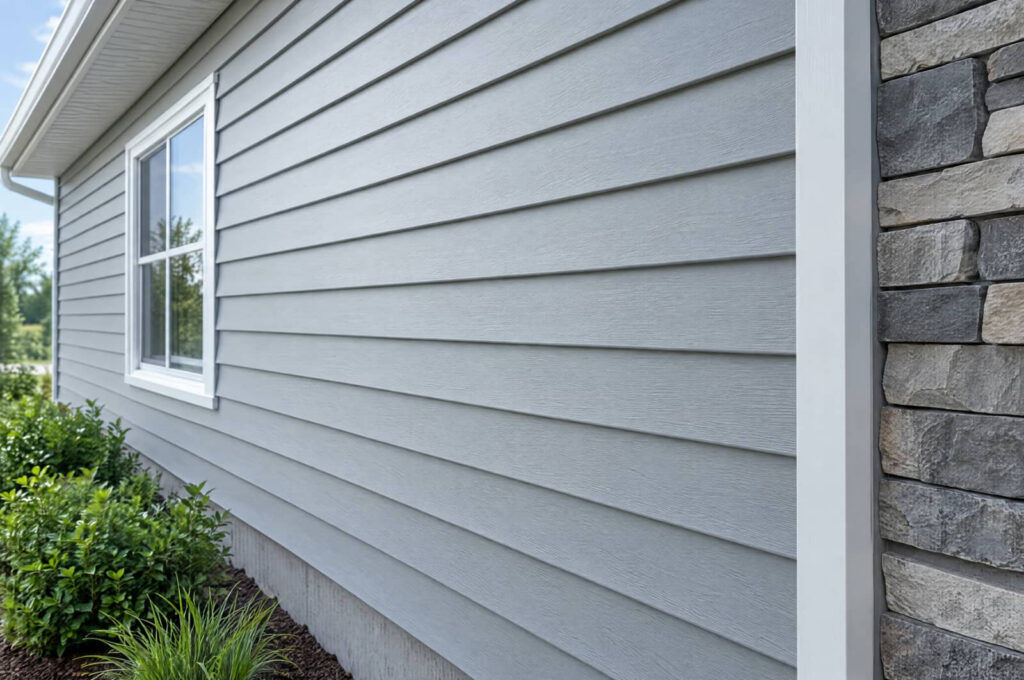
New siding can dramatically improve curb appeal by making your home look cleaner, newer, and more cohesive from the street. You signal care and order through consistent color, crisp lines, and updated textures that align with neighborhood standards.
When you replace worn or faded panels, you reduce visual noise that can make a house feel neglected. New materials also help architectural details stand out, so your home reads as intentional rather than patched together.
This matters because buyers often form first impressions before they step inside. If you want your property to feel like it belongs in the community, siding gives you a direct, visible way to achieve that.
The result is a stronger exterior presence that supports overall appeal and perceived value.
How to Maximize Siding ROI
To maximize siding ROI, you should choose materials, colors, and installation quality that match your market and reduce future maintenance costs. When you evaluate options, focus on what buyers in your neighborhood expect and value.
You’ll usually improve returns by balancing durability, energy performance, and visual consistency with nearby homes. Consider these factors:
- Durable materials lower repair risk
- Neutral colors broaden buyer appeal
- Skilled installation prevents costly defects
- Regional styles improve market fit
You should also compare warranty terms, maintenance needs, and resale data before committing.
If your siding feels integrated with the surrounding homes, buyers are more likely to see it as a smart upgrade. That sense of fit can strengthen perceived value and support a stronger asking price.
Wrap-Up
When you replace worn siding, you’re not just changing a shell—you’re raising the banner on your home’s value. Like a well-kept storefront on a busy street, new siding signals care, reduces buyer hesitation, and strengthens curb appeal. Your return depends on material choice, installation quality, and neighborhood standards, but the effect is clear: cleaner lines and lower upkeep can make your property more competitive and more attractive when it’s time to sell.