
How Much Snow is Too Much Snow for Your Roof?
Fresh snow blanketing a rooftop can be a beautiful sight. However, too much snow building up on your roof can place stress on its structure, creating leaks and ice dams. In extreme cases, excess snow accumulation could even cause your roof to collapse.
In the snowy winter climate of the Twin Cities metro area, homeowners often have to wonder: how much snow is too much snow for my roof? With a better understanding of snow load limits and warning signs of too much snow, you’ll be prepared to take action when needed to protect your home.
How Much Snow Can a Twin Cities Roof Hold?
The Minneapolis–St. Paul metro regularly experiences long winters with multiple snowfalls, some of which bring wet, heavy snow. Over time, the combination of snow accumulation and freeze-thaw cycles will add significant weight to your roof. Keep in mind that fresh, fluffy snow is much lighter than compacted snow or ice. After a few warm days, followed by freezing nights, the same 6 inches of snow can weigh two to three times more than when it first fell.
Although residential roofs in the Twin Cities are built to support significant snow loads, they can be overwhelmed eventually. As a general guideline for snow weight:
- 1 foot of fresh snow weighs about 5-7 pounds per square foot
- 1 foot of tightly packed snow weighs about 10-15 pounds per square foot
- 1 foot of wet snow or ice can weigh more than 20 pounds per square foot
While it varies based on several factors such as age and roofing materials, the average roof is designed to withstand somewhere between 30 and 50 pounds of snow per square foot. This means that a lot of snow will need to accumulate before your roof is at risk of collapse. However, keep in mind that layered snowfalls with ice dams can add weight very quickly, and that your roof may begin to endure damage long before it faces collapse.
Signs You Have Too Much Snow on Your Roof
- Ceilings begin to sag or bow because of excess stress on your roof.
- You hear cracking sounds from your attic or roof; a warning sign that the frame is shifting under weight.
- Doors become difficult to open or close because your home is flexing under heavy snow load.
- New cracks appear in drywall because of roof movement.
- You discover water stains or dripping caused by your roof leaking.
- You see a dip in your roofline, indicating dangerous structural deflection from heavy snow accumulation.
- Ice dams are forming along the eaves of your roof; these dams can trap snowmelt and add extra weight to the roof.
- Snow has reached a depth of over a foot, especially after multiple storms.
Warning signs of roof stress should never be ignored. Once a roof is overloaded with snow, structural failure can occur quickly. Watch out for the warning signs of winter roof stress so you’re ready to act. It should also be noted that flat or low-slope roofs, as well as older roofs, are more vulnerable to collapse from snow accumulation.
Protecting Your Roof During Winter
You don’t need to worry about your roof after every snowstorm sweeps through the Twin Cities. What’s important is that you keep an eye on the weather and monitor it more closely if there are going to be multiple winter storms in a row – especially if some of those storms dump heavy, wet snow.
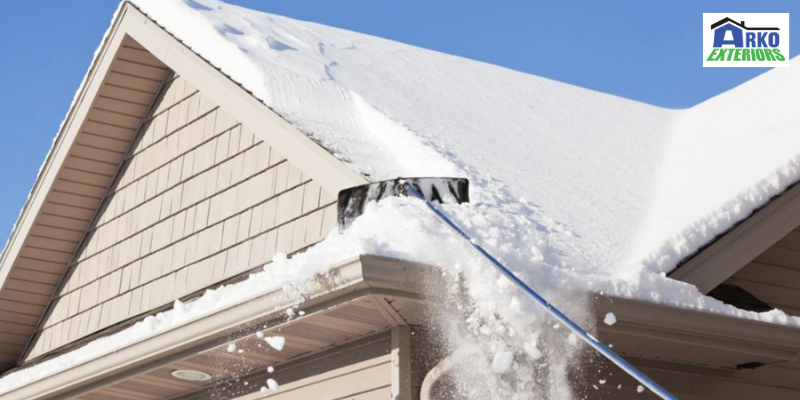
When more than 6 inches of snow appears to have piled on your roof with no sign of melting soon, it may be a good idea to remove the snow yourself. From the ground, use a roof rake to safely pull snow from the edges of your roof. Don’t worry about the snow that’s out of reach; if you clear enough from the bottom, the rest will gradually melt and slide off. Never climb onto a snowy roof, which is extremely dangerous and leads to numerous injuries across the Twin Cities area each winter.
If ice dams are forming on your roof, removing them should be your first priority. Ice dams trap melting snow on your roof, forcing water under shingles and adding concentrated weight along roof edges. Don’t try to chip away ice or melt it with chemicals, both of which can damage your roof. Hire a professional ice removal contractor in the Minneapolis–St. Paul area to safely melt the snow using low-pressure steam.
Professional Snow & Ice Removal Specialists in the Twin Cities
Working with local professionals is the best way to keep your roof clear of heavy snow and ice dams throughout the winter. Contact Arko Exteriors today if you’re interested in our snow and ice dam removal services in the Twin Cities metro area!