Gutter installation costs depend on several factors, including roofline complexity, total gutter length, and the material you choose. A simple single-story home with standard aluminum gutters typically costs less than a tall house with multiple angles, copper gutters, or add-ons like leaf guards. Labor costs can also increase when installers need extra equipment or time. Understanding these factors helps you compare quotes and avoid unexpected expenses.
Key Takeaways
- Roof complexity and pitch drive labor time, custom cuts, and safety equipment needs, making installation significantly more expensive.
- Roof size, layout, and home height increase linear footage, materials, and access difficulty, especially on multi-story homes.
- Gutter material choice affects price most, with vinyl cheapest, aluminum midrange, and copper or specialty metals costing more.
- Gutter size, style, and add-ons like leaf guards or downspout extensions raise total installation costs.
- Labor rates, old gutter removal, regional pricing, and seasonal demand can noticeably change the final project cost.
What Drives Gutter Installation Costs?
Gutter installation costs depend on several technical factors, starting with your roofline complexity, the gutter material, and the total linear footage required.
You’ll also see pricing move with roof height, slope, access limits, and the number of corners or downspouts your home needs.
When your crew must work around dormers, valleys, or tight setbacks, labor time rises, and your total shifts with it.
If you belong to a neighborhood of well-kept homes, you know clean drainage protects siding and foundations, so each design choice matters.
These gutter installation cost factors shape both system performance and final labor charges.
You can lower surprises by getting measured quotes, confirming removal needs, and matching the layout to your home’s drainage demands.
How Gutter Material Affects Cost
Your gutter material choice directly changes your installation cost, since vinyl, aluminum, steel, and copper each have different price points.
You’ll also need to weigh durability and maintenance, because a cheaper material may need replacement or repairs sooner.
In practice, you should compare upfront cost against long-term performance to choose the best system for your budget.
Material Cost Differences
Material choice is one of the biggest drivers of gutter installation cost, since each option changes both material price and labor demands.
You’ll usually see vinyl at the low end, aluminum in the middle, and steel, copper, or zinc at higher price points. Each material comes with different sheet or coil costs, and that shifts your total quickly.
Custom finishes, thicker gauges, and seamless fabrication can add more expense because they require specialized handling. If you’re comparing quotes, ask what’s included so you can match apples to apples.
- Vinyl: lowest upfront cost
- Aluminum: balanced price and availability
- Steel: stronger, often pricier
- Copper: premium material pricing
- Zinc: specialty cost structure
Durability And Maintenance
Even when two gutter systems cost the same to install, their long-term value can differ sharply because durability and maintenance needs change the real price over time.
If you choose aluminum, you’ll usually get solid corrosion resistance and manageable upkeep, so your team can plan fewer repairs.
Steel costs more to protect, but it can handle impact better when conditions are rough.
Copper lasts decades and needs less frequent replacement, yet its upfront price stays high.
Vinyl keeps costs low, but UV exposure, cracking, and sagging can increase service calls.
When you match material to climate, debris load, and inspection habits, you cut surprises.
That’s how you keep your property’s drainage system reliable without overspending.
How Roof Size and Layout Affect Cost
Roof size is one of the biggest drivers of gutter installation cost because longer runs require more material, labor, and fastening points. When you have a larger roofline, you’ll need more linear footage, more downspouts, and more connectors to keep runoff controlled.
Roof layout matters too, since inside corners, hips, valleys, and offsets force custom cuts and careful fitting. You’re part of the group that benefits when the design is simple and continuous, because crews can work faster and waste less material.
- Long eaves add footage
- Multiple roof sections add joints
- Complex corners increase labor
- Valleys need precise placement
- More downspouts raise material needs
Why Home Height Raises Labor Costs
When your home has multiple stories, installers need more time to reach each roof edge and move materials safely.
They’ll also need extra safety equipment, which adds setup and handling labor. That higher access difficulty usually means the job takes longer and costs more.
Multi-Story Access Challenges
Home height raises gutter installation labor costs because crews need more time, equipment, and safety setup to reach upper eaves.
When your home has two or more stories, installers move slower and handle longer runs with tighter positioning. That extra effort adds billed hours and can limit how many feet they finish each day.
You’ll also see higher costs when access points are narrow, patios block ladder placement, or rooflines change height often. These conditions force careful staging and repeated repositioning.
For owners planning a project, expect labor to rise with complexity, not just size.
- Taller walls increase setup time
- Long ladder moves slow production
- Obstructions reduce work efficiency
- Complex rooflines add repositioning
- More labor hours mean higher cost
Safety Equipment Needs
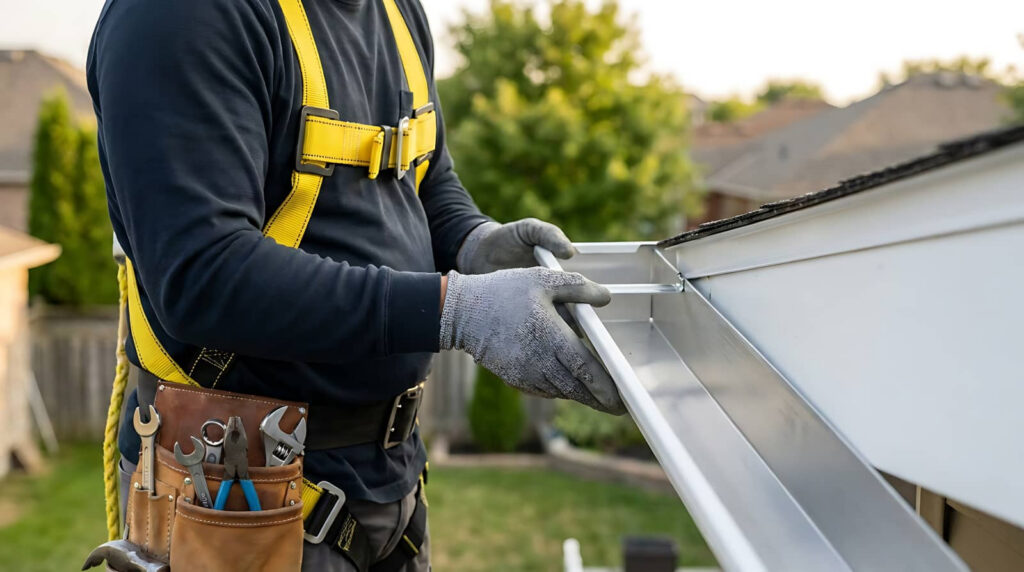
Higher homes don’t just slow the crew down; they also require more safety gear and setup time. You’re paying for harnesses, roof anchors, ladders with stabilizers, and often lift equipment when access gets tricky.
Crews must inspect gear, secure tie-offs, and confirm compliant fall protection before anyone starts work. That adds overhead you won’t see on a single-story job.
If your roof edge is steep or high, installers may also need helmets, non-slip footwear, and extra crew coordination to keep everyone safe. These requirements aren’t optional—they protect the team and your property.
When you compare quotes, ask what safety measures are included so you can see why taller homes carry higher labor costs and choose a contractor you can trust.
Longer Labor Time
As roof height increases, each phase of the installation takes longer because crews spend more time moving materials, setting ladders or lifts, and working carefully at elevation.
You’ll see labor hours rise as access gets harder and each trip up and down slows the crew. Taller homes also require more setup, repositioning, and checks, which adds time before gutters even go on.
That extra time shows up directly in your quote, especially if the roofline is steep or segmented.
- Material staging takes longer
- Ladder moves add labor
- Lift setup increases downtime
- Roof edges need slower handling
- Inspection and cleanup extend the job
Which Gutter Styles Cost More?
K-style gutters usually cost less than more specialized profiles, while half-round, box, and custom copper systems often push prices higher because they need more material, more labor, or both.
You’ll usually see the biggest jump with half-round gutters, since installers must fasten them carefully and align them cleanly. Box gutters cost more when your roofline demands a larger capacity or a built-in look.
Custom copper sits at the top because the metal itself costs more and the fabrication takes longer. If you want a budget-friendly setup, standard aluminum K-style gives you the best value.
If you want a distinct finish, expect to pay for the profile that matches your home and the crew that can install it right.
Which Add-Ons Increase Installation Costs?
Beyond the gutter profile itself, several add-ons can raise your installation price. If you want a system that fits your home and your crew’s expectations, budget for extras that improve performance and reduce maintenance.
You’ll usually pay more for:
- Leaf guards to block debris
- Downspout extensions for better drainage
- Splash blocks to limit erosion
- Heat cables for ice control
- Seam sealing or custom end caps
Each option adds material and labor time, and some need precise fitting on long runs or tight corners.
Your installer may also charge more for matching colors, oversized outlets, or repainting touch-ups. If you live with heavy trees or freeze-thaw cycles, these add-ons can be worth it because they help your gutters last longer and work more reliably.
Wrap-Up
In the end, you’ll see that roofline complexity and material choice affect gutter installation costs the most. A simple one-story home with standard aluminum gutters may cost far less than a multi-story house with copper and custom add-ons. For a quick visual, think of cost as a ladder: if your base installation is $1,500, premium materials and difficult access can push higher. Always compare layout, height, and extras before you commit.