
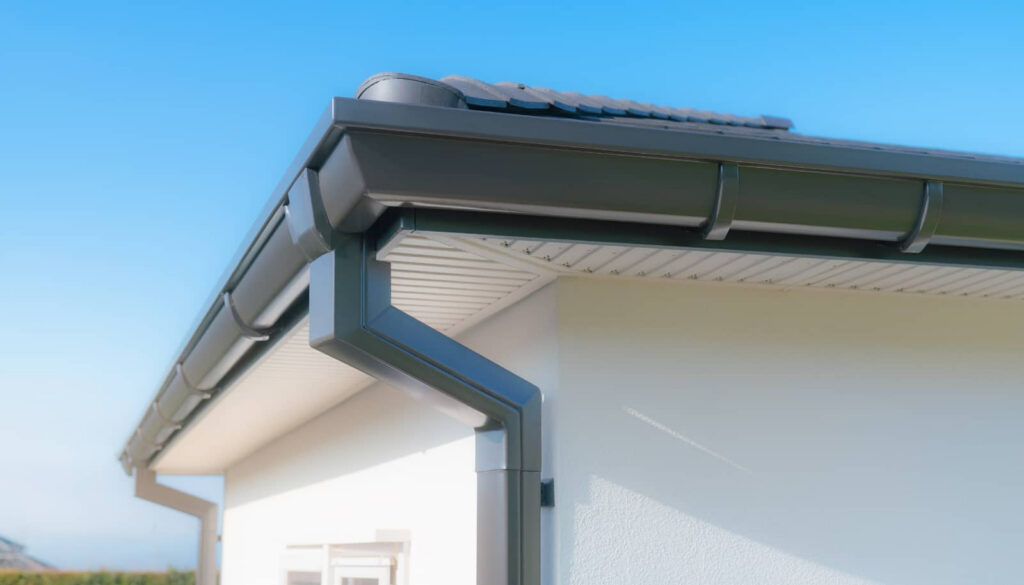
After one storm, a homeowner watched water spill over undersized gutters like a sink that couldn’t drain fast enough. You need a system sized to your roof, rainfall, and slope, or runoff will find the weak point first. A 5-inch K-style gutter works for many homes, but larger roofs and wet climates often need 6-inch capacity. Material choice, downspouts, and pitch all change the outcome, and the next step isn’t obvious. This guide explains how to pick the right gutter size and materials for your home.
Key Takeaways
- Choose gutter size based on roof area, pitch, and local rainfall, not just home style.
- Standard homes often use 5-inch gutters, while larger roofs or heavy rain areas may need 6-inch gutters.
- Match downspout capacity and spacing to roof runoff to prevent bottlenecks and overflow.
- Select materials by climate, budget, and maintenance needs: aluminum, steel, copper, and vinyl each have different lifespans.
- Reduce elbows and long horizontal runs so water drains efficiently and protects siding, fascia, and foundations.
What Gutter Size Does Your Home Need?
How do you know what gutter size your home needs? You start by matching gutter sizing to your roof area, local rainfall, and the volume of water your home sheds during storms.
Most homes use 5-inch K-style gutters, but larger roofs or heavy rain zones often need 6-inch systems for better drainage. You’ll also want to check downspout capacity, since undersized outlets can bottleneck runoff and cause overflow.
When you compare gutter sizing and material options, balance performance with durability. Aluminum resists rust and stays light, while steel offers strength and copper adds long service life with a premium look.
Choose a size that fits your home’s demands, and you’ll protect siding, fascia, and landscaping with confidence.
How Roof Pitch Affects Gutter Sizing
When your roof is steeper, water reaches the gutters faster and with more force.
That pitch also affects how much runoff your system must handle during heavy rain.
You need to match roof pitch to gutter size so the gutters can move water efficiently without overflowing.
Steeper Roofs, Faster Flow
As roof pitch increases, water sheds faster and the gutter has to handle a higher peak flow in less time. You should size for that burst, not just for average rain, because a steep roof sends runoff to the eaves almost all at once.
In practice, you’ll often need wider gutters, deeper profiles, or more downspouts to keep water moving without overflow. You can also reduce stress by shortening the run and placing outlets where flow converges.
Check the roof’s drainage path, fascia height, and splash risk at corners and valleys. When you match the system to your roof’s speed, you protect siding, foundations, and your home’s clean, cohesive look.
That’s how you build a setup that feels right for your house and your neighborhood.
Pitch And Water Volume
Roof pitch directly changes the rate and volume of water your gutters must handle, because steeper slopes deliver runoff faster and in a shorter burst.
When you compare roofs, remember that pitch doesn’t just affect speed; it also concentrates water into fewer, heavier discharge moments. That means your gutters face sharper surges at valleys, edges, and downspouts, especially during intense rain.
If you live in a neighborhood with similar homes, you’ve probably seen how two roofs can behave very differently in the same storm.
You should look at pitch as part of your drainage load, not just a design detail. The more water your roof sheds at once, the more your system must stay open, stable, and ready for peak flow.
Matching Pitch To Gutter Size
Steeper roofs usually need larger gutters because they send more water downhill faster, creating short, intense surges that smaller channels can’t always carry safely.
You should match gutter capacity to pitch, not just roof area, because a steep slope increases flow speed and peak discharge.
For most homes, a moderate pitch can use standard 5-inch K-style gutters, but steep sections often need 6-inch gutters or added downspouts to prevent overflow.
You’ll also want tight hanger spacing and properly sized outlets so the system keeps up during heavy rain.
When you size gutters this way, you protect fascia, siding, and foundation, and you fit into a smarter drainage plan like other well-protected homes in your neighborhood.
5-Inch vs. 6-Inch Gutters
Which gutter size fits your home better: 5-inch or 6-inch?
You’ll usually choose 5-inch gutters for standard roof areas with moderate rainfall and average runoff. They’re common, cost-effective, and fit most residential layouts without looking oversized.
Choose 6-inch gutters when your roof has a steep pitch, long runs, large surface area, or you live where storms hit hard. The larger channel moves water faster and gives you more margin before overflow starts. That extra capacity helps protect your fascia, siding, and foundation when water comes down fast.
If you want a system that feels dependable and belongs on a well-protected home, match the size to your roof’s demand, not just the price tag. A proper fit keeps your drainage system working efficiently.
Compare Aluminum, Steel, Copper, and Vinyl Gutters
You’ll find aluminum gutters are lightweight, corrosion-resistant, and cost-effective for most homes.
Steel offers higher strength, copper delivers long-term durability and a premium finish, and vinyl gives you a low-cost option that’s easy to install.
Compare each material’s weight, lifespan, and maintenance needs so you can match performance to your drainage demands.
Aluminum Gutter Benefits
Aluminum gutters give you a strong balance of low weight, corrosion resistance, and cost, making them a practical choice for most homes. You can install them with less structural stress, and that helps your fascia and hangers stay secure.
Their smooth surface sheds water efficiently, so you reduce standing moisture and routine maintenance. You also get easy field cutting and shaping, which lets your crew match clean lines and custom roof edges without special tools.
When you want a system that fits a neighborhood standard and performs reliably, aluminum keeps you in good company. It’s durable enough for long service, yet affordable enough to protect your budget.
For many homeowners, that combination delivers dependable drainage without unnecessary complexity or upkeep headaches every season.
Steel, Copper, Vinyl Options
Steel, copper, and vinyl gutters each trade off cost, durability, and maintenance in different ways.
You’ll usually choose aluminum for balanced performance, but steel suits heavy snow and large roofs when you need extra rigidity. Galvanized steel resists impact, yet it can rust if coatings fail, so inspect seams and fasteners.
Copper lasts longest and develops a protective patina, but it costs far more and needs skilled installation.
Vinyl is the lightest and cheapest option, and you can install it quickly, but it becomes brittle in cold weather and sags under load.
Match material to your climate, roof area, and budget. When you compare options carefully, you’ll protect your home and join the group of homeowners who plan drainage with confidence.
How Long Each Gutter Material Lasts
When you choose a gutter material, its service life often matters as much as its cost, because durability affects how often you’ll repair or replace the system.
Vinyl typically lasts 10 to 20 years, and you may see earlier wear if joints loosen or panels crack.
Aluminum often serves 20 to 30 years with normal upkeep, and it stays lightweight and easy to handle.
Galvanized steel can reach 20 to 25 years, but you’ll need to watch for rust at scratches and fasteners.
Copper is the longest-lived option, often lasting 50 years or more, and it develops a protective patina over time.
You belong in the group that plans ahead when you match material life to your budget, maintenance habits, and long-term home goals.
Which Gutter Materials Work Best in Your Climate?
Climate should guide your gutter choice because heat, cold, salt, and moisture each stress materials in different ways.
In hot, sunny climates, aluminum usually performs well because it resists rust and handles expansion better than steel.
In cold regions, you’ll want materials that tolerate freeze-thaw cycles, so seamless aluminum or galvanized steel often makes sense if you maintain them.
If you live near the coast, choose aluminum or stainless steel for better corrosion resistance against salt air.
Copper works in many climates, especially when you want long service and low upkeep, but it costs more.
Vinyl can suit mild, dry areas, yet it can crack under extreme temperature swings.
Match your material to your weather, and you’ll join homeowners who plan smart and avoid preventable repairs.
Why Downspouts Matter Too
Downspouts matter because they carry roof runoff away from your foundation, and undersized ones can bottleneck even a well-sized gutter system. You need enough capacity to match your roof area, local rainfall, and gutter volume, or water can overflow at the eaves.
A larger gutter won’t help if the downspout can’t move water quickly enough. You’ll usually get better performance by spacing downspouts strategically and keeping runs short and direct.
Elbows, long horizontal sections, and tight turns slow flow, so keep them minimal. You also want durable connections that stay secure through storms and freeze-thaw cycles.
When your system works as one unit, you protect siding, soil, and landscaping. That means less stress, fewer surprises, and a home that feels well cared for.
Avoid Common Gutter Sizing Mistakes
Even a properly pitched gutter can fail if you size it from the wrong assumptions, so you need to match gutter width, depth, downspout capacity, and roof runoff, not just pick a standard size.
Measure roof area, slope, and rainfall intensity before you buy, then choose a system that moves water fast enough for your home and your crew’s shared standards.
- Don’t ignore long roof runs; they concentrate flow and overload undersized sections.
- Don’t size by house style alone; fascia height and debris load matter.
- Don’t forget outlet spacing; too few downspouts create backups and overflow.
When you avoid these mistakes, you protect siding, foundations, and the confidence that your drainage setup belongs on your home.
Summary
So, do bigger gutters always solve overflow? Not necessarily. You need to match gutter size, material, roof pitch, and downspout capacity to your home and climate. A 5-inch K-style gutter works for many roofs, but steep pitches, large surface areas, or heavy rain may justify 6-inch systems. Pick aluminum for balance, steel for strength, copper for longevity, or vinyl for budget. When you size the whole system correctly, you’ll protect your home better.
Choosing the right gutter size and materials comes down to your roof area, local rainfall, and how long you want the system to last. Not sure which gutter size and materials fit your home? Our team provides expert gutter installation and replacement and can recommend the best option for your roofline. Contact Arko Exteriors to get started. You can also read more about rain gutter types and materials.